
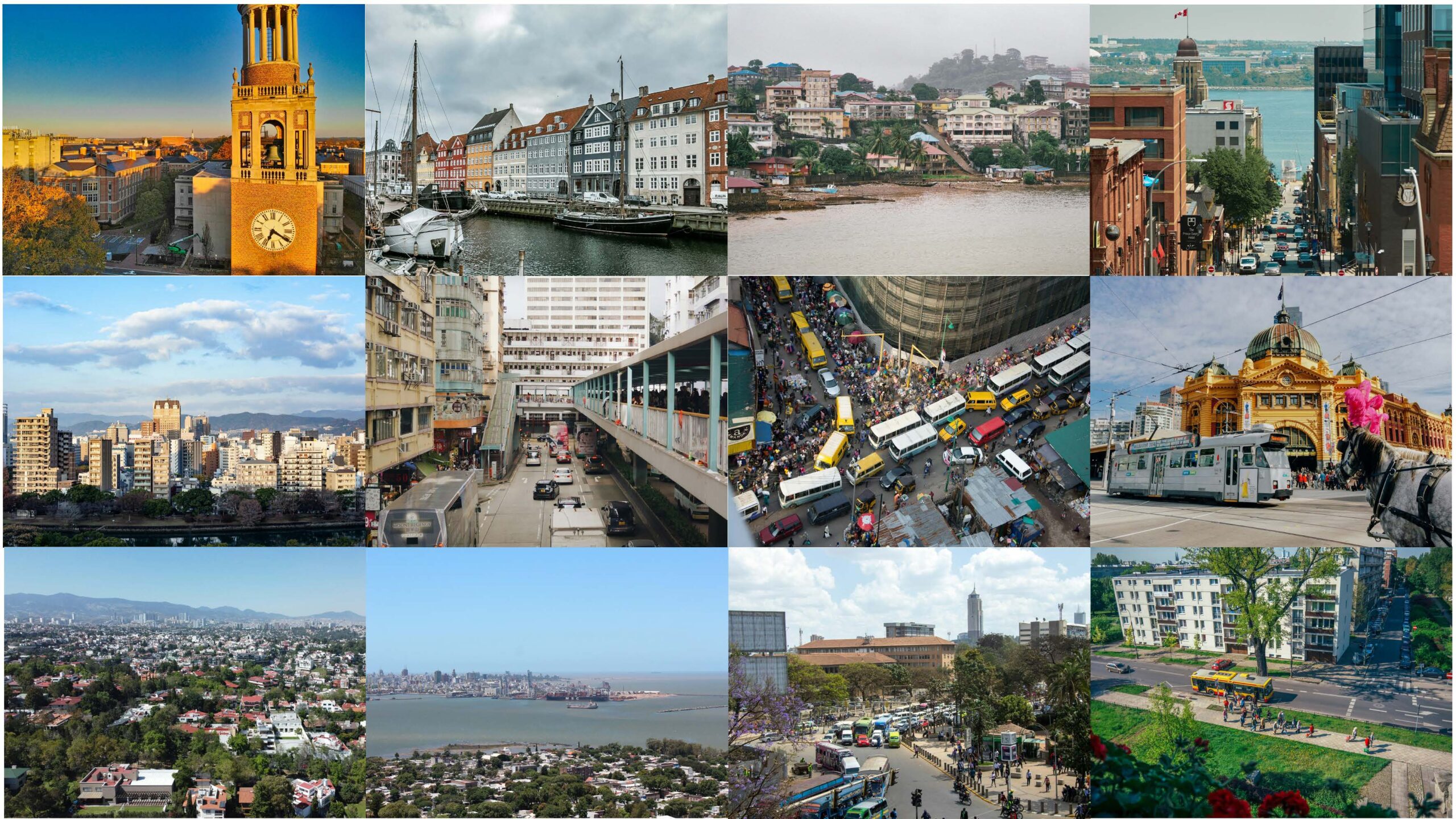
- The Cities Climate Action Report Card (CCARC) is a new tool that measures the transparency, integrity, and leadership of cities’ net-zero pledges, climate action plans, and implementation strategies. Building on foundational scientific recommendations from international reports, the CCARC transforms these guidelines into actionable indicators, offering a clear assessment of cities’ climate mitigation efforts.
- Findings from the CCARC showed notable ambition in setting targets, with many exceeding the national targets of their countries. However, gaps remain in cities’ implementation strategies, specifically regarding the funding plans, monitoring processes, and long-term viability of these commitments. The report found that while cities are on track with emissions reductions in the short term, progress varies significantly, with few cities aligning fully with the ambitious 1.5°C target.
- The Report Card evaluates 12 cities – Melbourne, Australia; Hiroshima City, Japan; Hong Kong; Copenhagen, Denmark; Warsaw, Poland; Montevideo, Uruguay; Mexico City, Mexico; Chapel Hill, NC, USA; Halifax, NS, Canada; Freetown, Sierra Leone; Lagos, Nigeria; and Nairobi, Kenya. All of these cities have established net-zero pledges to decarbonize their economies.
[Chapel Hill, NC, November 11, 2024] — As negotiators from around the world gather in Baku, Azerbaijan, for the COP29 Climate Conference, cities will be part of the conversation. With urban areas responsible for a significant share of global emissions, cities are increasingly setting their own emission reduction targets and developing climate action plans.
To evaluate the integrity of these efforts, researchers at the Data-Driven EnviroLab, based at the University of North Carolina at Chapel Hill, has released a Cities Climate Action Report Card (CCARC) that evaluates the transparency, integrity, and leadership of cities’ net-zero pledges, climate action plans, and implementation strategies. Grounded in scientific recommendations from key international reports, including the UN’s High-Level Expert Group on Net Zero Emissions from Non-State Actors released in 2023, the CCARC translates these guidelines into practical indicators to provide a framework that can evaluate any city.
In the pilot, the CCARC evaluated 12 diverse cities from around the globe, including Melbourne, Australia; Hiroshima City, Japan; Hong Kong; Copenhagen, Denmark; Warsaw, Poland; Montevideo, Uruguay; Mexico City, Mexico; Chapel Hill, NC, USA; Halifax, Nova Scotia; Freetown, Sierra Leone; Lagos, Nigeria; and Nairobi, Kenya. These cities were selected considering various factors such as city size, governance structure, and economic capacity. This approach aims to help cities and the global community better understand the effectiveness of local climate policies and actions.
Katherine Burley Farr, the lead researcher of the CCARC and a PhD Researcher at the Data-Driven EnviroLab (DDL), said:
“The CCARC framework provides a vital resource for comparing cities and tracking progress over time. For cities, this framework translates high-level recommendations into accessible and comprehensive evaluation metrics to support city climate action. It also promotes accountability in city-level actions and addresses the data gaps encountered by global observers, encouraging consistency in how cities report their climate action plans and outcomes.”
The CCARC reveals notable insights into cities’ climate action efforts, showing a high level of transparency in reporting targets and plans but identifying gaps in areas like implementation strategies and progress tracking. The report finds that while many cities have set ambitious net-zero targets that often surpass national commitments, they face challenges in sustaining long-term implementation, particularly in funding, monitoring, and adapting plans as conditions evolve.
Angel Hsu, Director of the DDL, said:
“The CCARC findings show that while cities of all economic backgrounds are setting ambitious climate targets, we see differences in their ability to follow through, particularly in areas like leadership actions and implementation resources. By examining these results, cities can learn from each other’s approaches to target setting and identify where additional support is needed to ensure progress aligns with global goals.”
The release of the CCARC aligns with the momentum generated by the recent Coalition for High Ambition Multilevel Partnerships (CHAMP) for Climate Action an initiative that brings together 73 countries to enhance cooperation between national and subnational governments on climate initiatives. With the CCARC, cities worldwide have a roadmap to strengthen their climate commitments and action plans, thus contributing to global efforts to limit global warming and improve climate resilience.
As cities around the world strive to combat climate change, the CCARC provides a vital tool for translating ambitious commitments into measurable progress. By offering cities the ability to assess and improve their climate strategies, the CCARC aims to drive meaningful, transparent, and high-integrity climate action at the city level.
The CCARC can be accessed at: https://datadrivenlab.org/cities_climate_action_report_card_nov2024/
For more information please contact: Katherine Burley Farr (kburley@unc.edu)
