
Podcasts

NC’s hot and humid summers: health impacts of the heat, who is most vulnerable, and potential remedies
As North Carolina experiences longer, hotter, and more humid summers, extreme heat is becoming one of the state’s most significant public health challenges.
In this episode of Due South on WUNC, Data-Driven EnviroLab Director Dr. Angel Hsu joins Dr. Ashley Ward, Director of the Heat Policy Innovation Hub at Duke University, to discuss how rising temperatures affect communities across both urban and rural North Carolina. The conversation discussions the communities most vulnerable to extreme heat — such as outdoor workers, older adults, and residents of historically underserved neighborhoods — and why access to cooling, green infrastructure, and community support matters more than ever.

Greenslop and the Cost of Measuring Badly
In this episode of TEQ, Carolina Milanesi sits down with Dr. Angel Hsu to discuss AI and sustainability.
Recorded after their panel discussion at London Climate Week, this conversation tackles questions such as: Why is measuring climate performance poorly often worse than not measuring it at all? Why do 96% of large companies reporting to CDP still fall short on at least one core climate disclosure metric? Can generic large language models be trusted to assess climate commitments, or do they risk reinforcing misinformation? And can the environmental benefits of climate AI outweigh its own energy footprint?
Drawing on two decades of experience in climate work, Dr. Hsu shares insights into the challenges of climate reporting and how we need to normalize failure in climate reporting.
Inside the AI Lab Taking on Climate Misinformation
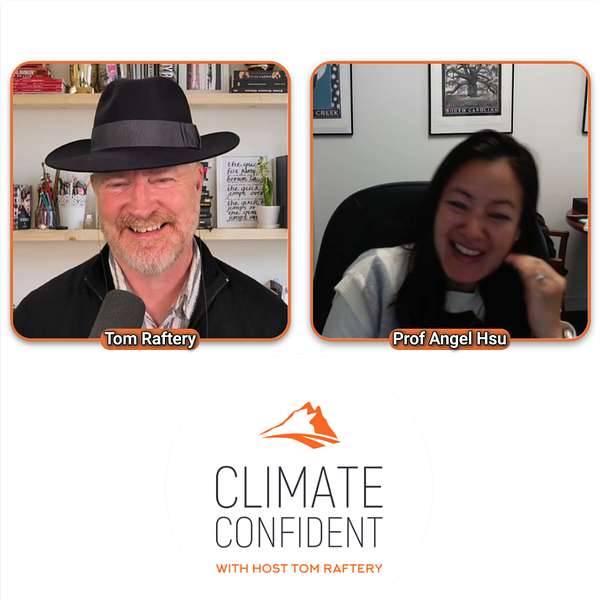
In this episode of the Climate Confident podcast, Data-Driven EnviroLab Director Dr. Angel Hsu discusses how artificial intelligence can be used to combat climate misinformation and bring real accountability to climate pledges.
Dr. Hsu introduces ChatNetZero and ChatNDC, two AI tools developed by the Data-Driven EnviroLab to help policymakers, researchers, and businesses evaluate net zero commitments and national climate plans using trusted, climate-specific data. The conversation also explores what policymakers can do today to use AI responsibly, why domain-specific AI is better suited for climate applications than general-purpose chatbots, and why transparency in both data and AI is essential for informed climate decision-making.
Climate Action in the Age of AI: Can Intelligent Systems Save the Planet?
Discover our latest podcast recorded at the 2025 CLAIM workshop, hosted by the Data-Driven EnviroLab and held at UNC-Chapel Hill. The event brought together researchers, practitioners, and stakeholders to examine the role of Al in climate action. Featured are three panels and one keynote address with leading experts in Al, climate policy, corporate sustainability, and science communication, exploring how Al can be used credibly to navigate societal and policy challenges.
These recordings are meant to foster dialogue, surface insights, and inform responsible approaches to climate leadership through Al.
