The following blog was written by Sarah Berk, a Postdoctoral Research Associate at the Data-Driven EnviroLab.
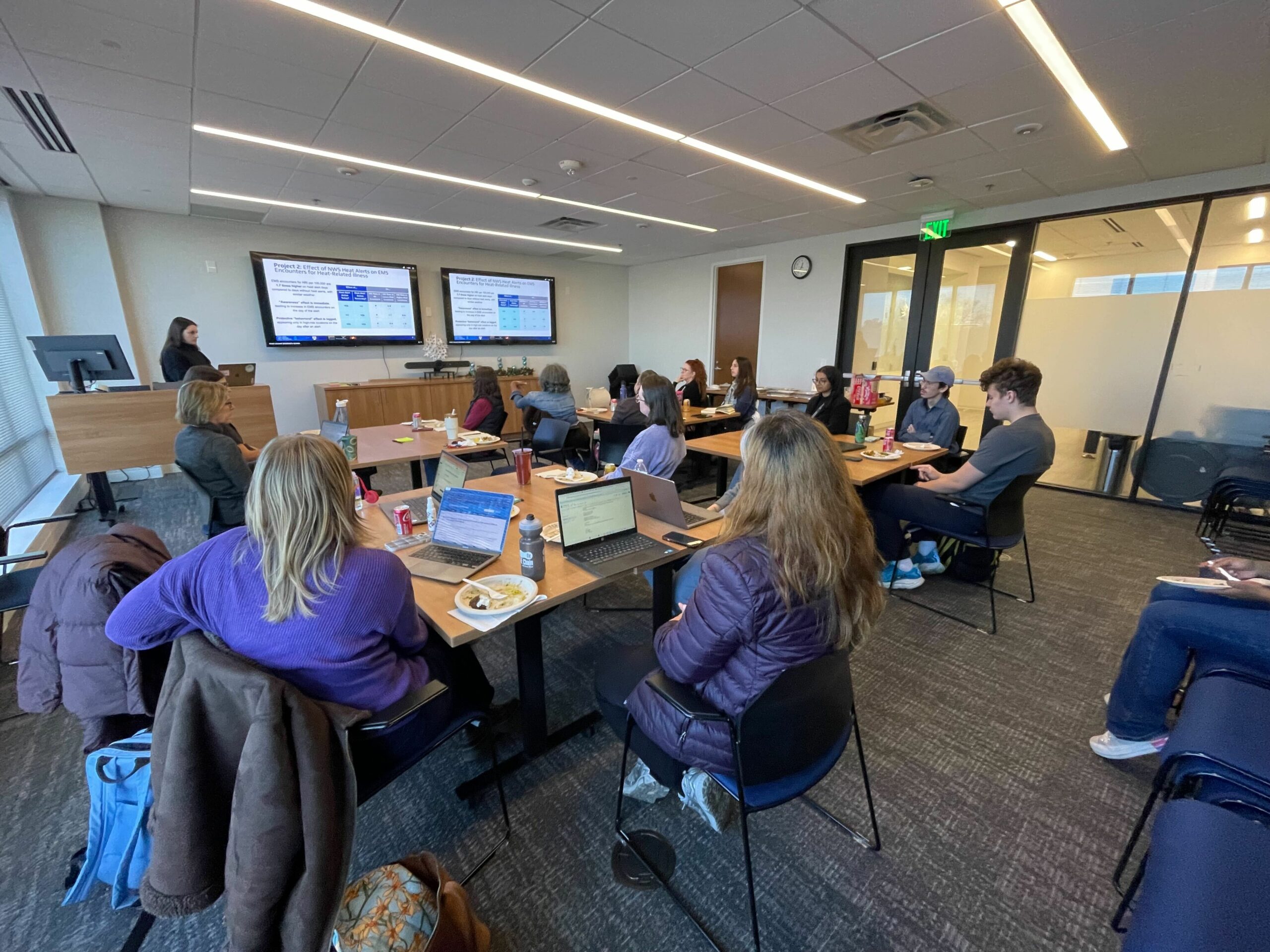
A key part of the project “Exploring Disparities and Solutions to U.S. Urban Heat Stress and Climate Justice” is recognising the importance of integrating community in our research. Gaining input at various stages of the project means we co-create research outcomes and ensure our work is beneficial for the community. On 11th December 2025, our community advisory board and local government representatives gathered for our third meeting at the Data-Driven EnviroLab’s Chapel Hill offices, to discuss the current research and future directions of the project.
The purpose of the meeting was to share updates on research using Durham’s high-resolution air temperature and relative humidity dataset, to gather important feedback on how this information can be made more accessible and more useful for communities and decisionmakers.The meeting opened with an overview of three heat-related research projects across North Carolina and the Triangle region. Katherine Burley, DDL research assistant, presented her work on various aspects of heat; investigating health impacts, heat warning efficiency, and an evaluation of cool pavements.
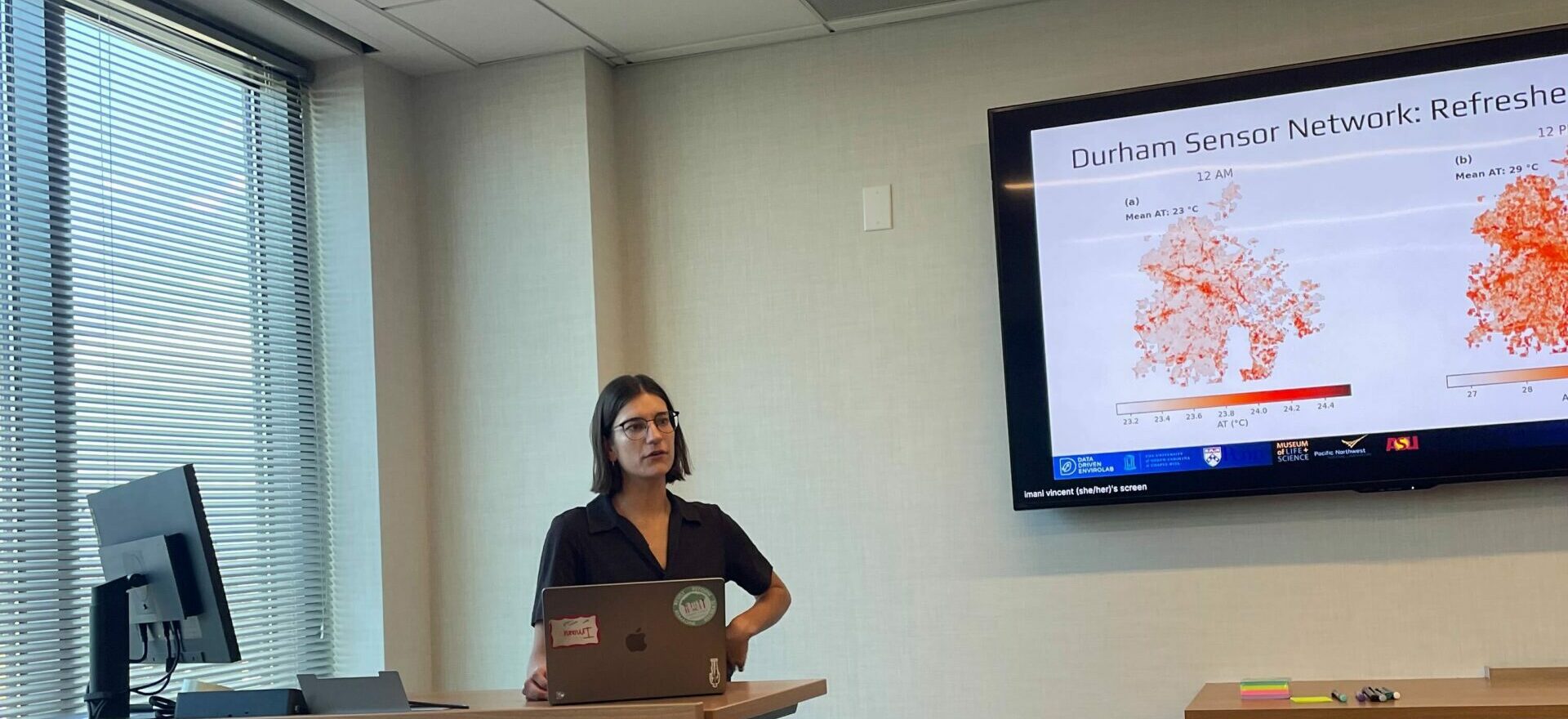
We then spoke about the Durham heat stress maps created through the project, presented by Sarah Berk, and how we can make this accessible and useful for a broad audience. Conversation centered on an interactive dashboard (https://durham-heat-stress-explorer.streamlit.app/), created to allow users to explore spatial patterns of heat exposure across the city and examine conditions on individual days. Through group feedback, key areas of improvements were identified, underscoring the value of these meetings for shaping community-relevant tools. Discussion then turned to how this research can better support heat mitigation efforts. Participants raised ongoing concerns about the impacts of new development, particularly in light of proposed amendments to Durham’s Unified Development Ordinance scheduled to go before City Council in early 2026. Areas highlighted as of particular importance for heat monitoring and mitigation are those serving immigrant communities, who may have to wait outdoors for extended periods to access medical care, and areas with schools, where students needing to commute or walk to grocery stores can be exposed to extreme heat.
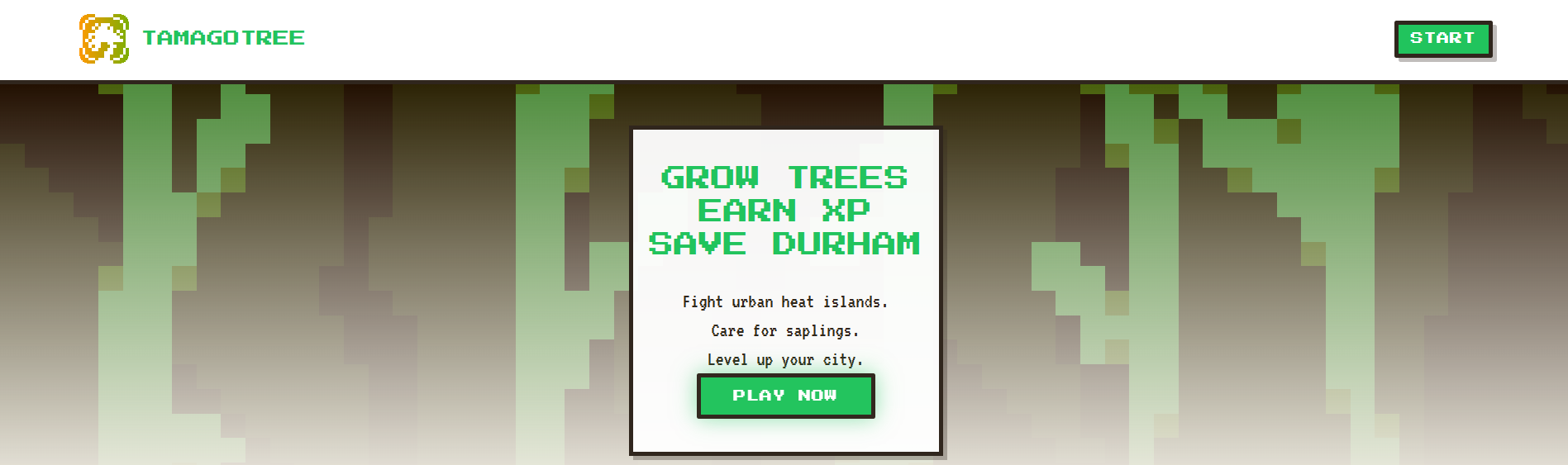
An exciting use of the Durham heat data, a web app named Tamagotree, developed during the NC Hackathon by UNC students Lev Marushevskyi, Leah Nikhil, and Sean Branigan, was shared with the participants. This fun and creative app, based on the 90s craze of Tamagotchi virtual pets, gamifies tree care in Durham and encourages players to take stewardship of local trees. Lots of ideas for how to move this project to the next stage were discussed – we are excited to see this progress!
The final presentation by Izzy Bukovnik introduced a new Urban Risk and Resilience framework under development as a new aspect of the Urban Environment Social Inclusion Index (UESI). This framework emphasises community assets and their potential to mitigate risk. Using the Durham data, we explored liveability during summer heat for both younger and older adults, revealing particularly concerning results for older populations, who experienced dangerous heat risk across many summer days. The session concluded with a survey in which participants ranked core components of risk, for example, hazard (e.g. heatwaves), exposure (spatial variation in heat severity), sensitivity (how susceptible exposed populations are), and adaptive capacity (measures that reduce heat impacts). Collecting this feedback at an early stage is a critical step in shaping the framework’s development.
Before saying our goodbyes, several upcoming events were shared, including a tree giveaway by Merrick-Moore community development corporation and Keep Durham Beautiful, a Durham middle school symposium in May 2026, food box initiatives organized by the Tuscarora Nation, and ongoing development of Durham County heat action plans.
Together, the meeting underscored a shared commitment: ensuring that the work created in this project translates into meaningful, equitable action for Durham’s communities.